
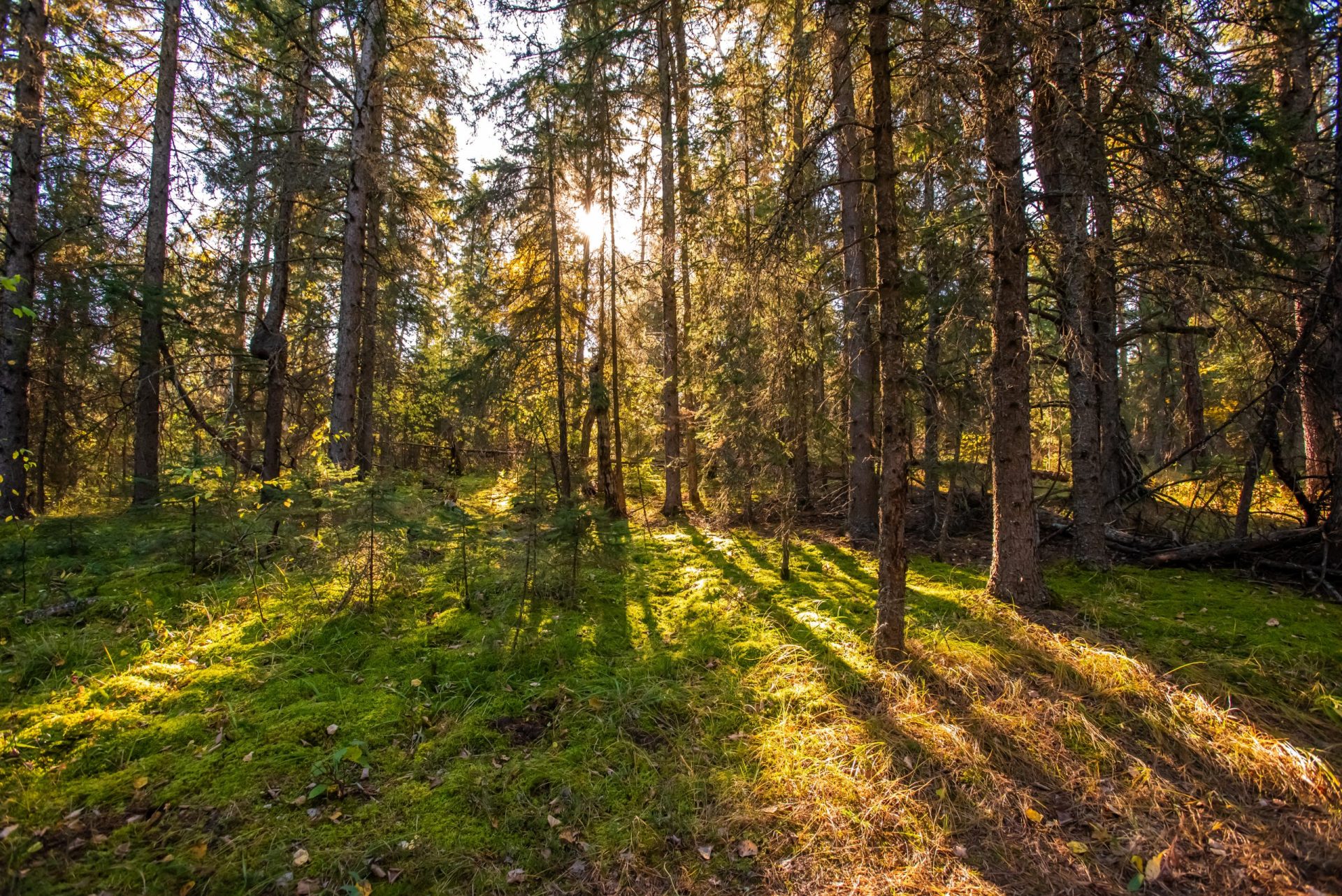
The boreal forest plays an important role in the carbon cycle. However, our understanding of how species respond to the stress caused by climate change remains limited. This issue is critical, as these environments, which usually absorb some of the CO2 emissions generated by humans, may no longer be able to fulfil this role due to warmer and drier conditions.
This question is at the heart of research conducted by Alexandre Roy, a professor in the Department of Environmental Sciences at the Université du Québec à Trois-Rivières, who uses remote sensing and satellites to monitor climate change in northern regions and understand the interactions between vegetation, soil and snow. Roy and his team used three different instruments to measure tree hydraulics—that is, the complex system of water circulation from roots to leaves. The use of various sensors allowed them to observe not only the flow of water inside the trunks but also its storage.
This research was conducted at three sites representative of Canada’s forest ecozones—the Université Sherbrooke campus, northern Saskatchewan, and the Montmorency Forest—and focused on three species in particular: black spruce, balsam fir, and red pine. Part of the research was conducted in collaboration with Québec’s Ministère de l’Environnement, de la Lutte contre les changements climatiques, de la Faune et des Parcs and Natural Resources Canada, both of which are seeking to better understand the effects of these changes on forest production.
The study found that each species reacts differently to climate change, but the response also varied by region. In Eastern Canada, rising temperatures are partially offset by increased precipitation, which is less the case in the West. However, the team observed that certain trees are more resilient to water stress.
Roy now hopes to use satellite data to measure tree water content across Canada, which would, among other things, allow for better monitoring of potential fuel sources for forest fires.